
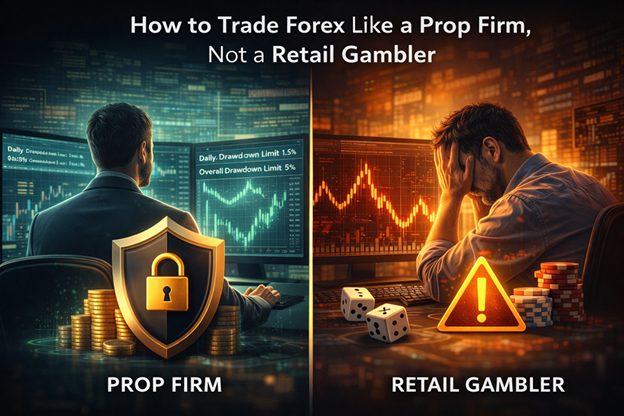
Prop firms trade with one goal in mind: capital preservation first, profits second. This mindset alone separates professional traders from most retail gamblers. While retail traders often chase big wins, prop firms focus on consistency, risk control, and strict rule adherence.
One of the biggest differences is drawdown management. Prop firms operate under fixed daily and overall drawdown limits. When those limits are reached, trading stops. No revenge trades, no emotional decisions. Retail traders, on the other hand, often increase risk after losses, turning temporary drawdowns into blown accounts.
Another key difference is position sizing. Prop firms size trades conservatively and scale only after proving consistency. They don’t “go all in” on high-confidence setups. Instead, they rely on statistical edge over hundreds or thousands of trades. One trade never matters enough to threaten the account.
Automation plays a major role in this process. Many prop-style strategies use EAs to enforce discipline. Rules such as maximum trades per day, session filters, and hard stop-loss limits are coded into the system. This removes emotional interference and ensures compliance with risk rules, something human traders struggle to maintain over time.
Prop firms also avoid overtrading. They focus on specific sessions, market conditions, and instruments that fit their strategy. No trade is taken simply because the market is moving. Patience is a competitive advantage.
To trade like a prop firm, retail traders must shift their mindset. Stop trying to grow accounts quickly. Start trying to survive indefinitely. Use strict drawdown limits, realistic risk per trade, and systems that prioritize rule enforcement over excitement.
The goal is not to win every trade.
The goal is to stay in the game long enough for your edge to work.
That is how professionals trade Forex.
0 Comments